
The Cost of Good Falconry

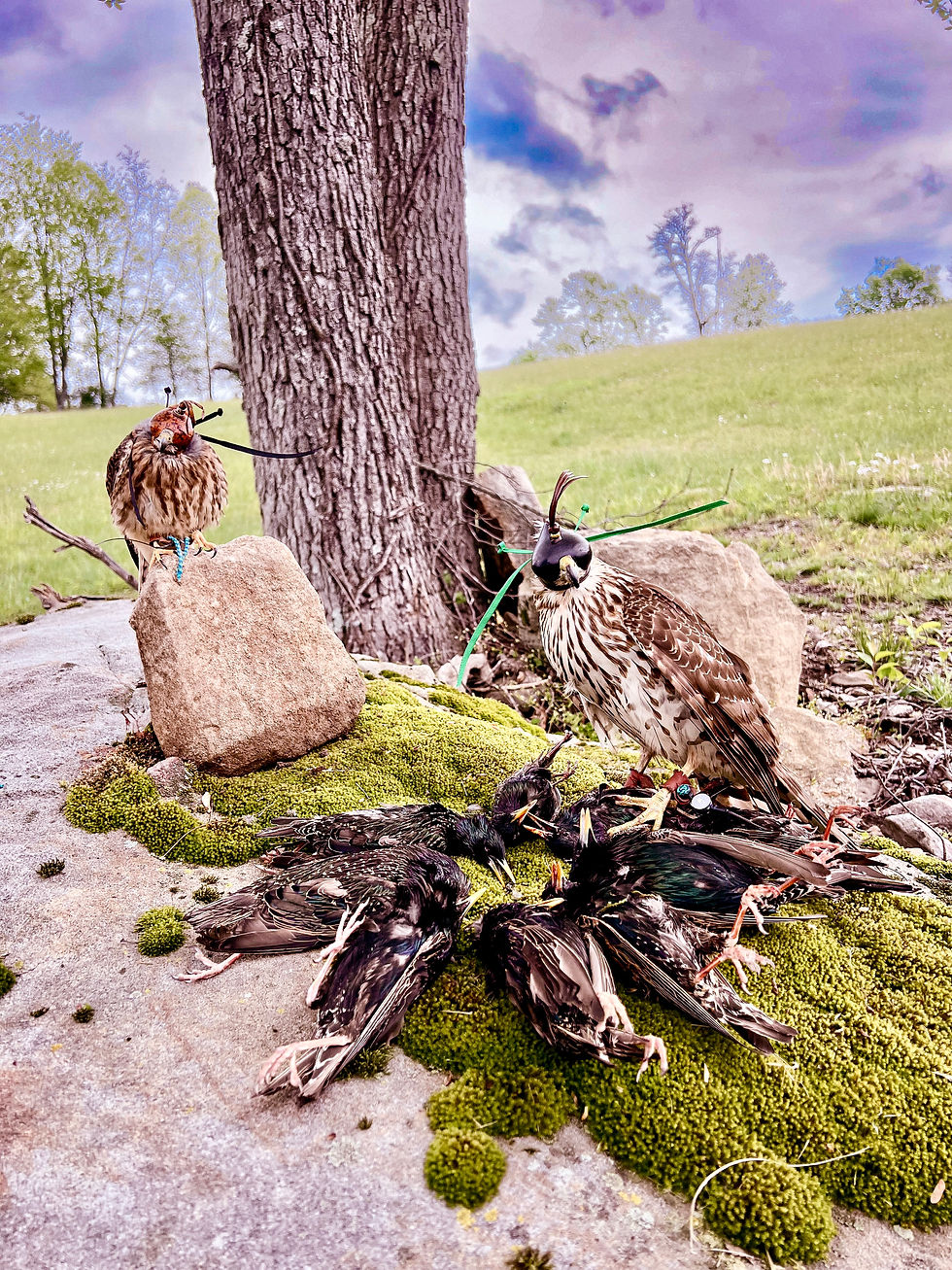
I'm inherently more grateful the older I get. I try to be present and appreciate every minute. I'm thankful I'm alive, healthy and able to live my life doing what I love with the people that are important to me. There are costs though. Nothing enjoyable is free. Even taking time to drink your coffee on the front porch in the morning comes at the expense of whatever else you're putting off while you're enjoying the experience. There's a balance though, and that balance is hard fought during micro season for a person like me.
I'm not a balanced person. When it comes to falconry, I'm bad about putting falconry first at the expense of other things. I know it's not the best way to be, but instead of fighting the balance this season, I chose to embrace the things that make me successful in falconry even though those same things don't always make me successful in life.
I took time to reflect and appreciate what it looks like to practice falconry at the level my hawking partner and I choose to practice: the things you give up, the things you put off, the people you lean on, the plans you cancel when there's a bird emergency, the favors you ask of others, the late nights nursing birds, the countless hours of jump-ups 150 reps at a time, the feeling of building something, rebuilding it then rebuilding it again, the feeling of thinking your season is finished, the feeling of knowing your season is finished, getting 20 slips in two hours, getting two slips in two hours, hawking when you've had a bad day, hawking when you've had a good day, making yourself turn off everything else while you're flying your birds.
Falconry done well comes at a cost. I don't plan on stopping anytime soon, but I do try to remember, it's not only the falconer that foots the bill. Our closest family and friends have to pay up just to remain in our lives. This isn't lost on me. This season pushed the limits of what I was capable of. I cracked a couple of times. I got knocked down several times and even once considered staying down for the count. Were it not for the support system I have at home and in my falconry community, this is a season I'd have given up on. To everyone in my life who paid the piper so I could finally successfully fly a passage Cooper's hawk with my hawking partner, Ray, thank you.
The Season by Numbers
This season by the numbers was our best yet even without the growth and discoveries. We flew 1x intermewed kestrel Ally and passage Cooper's hawk Tina.

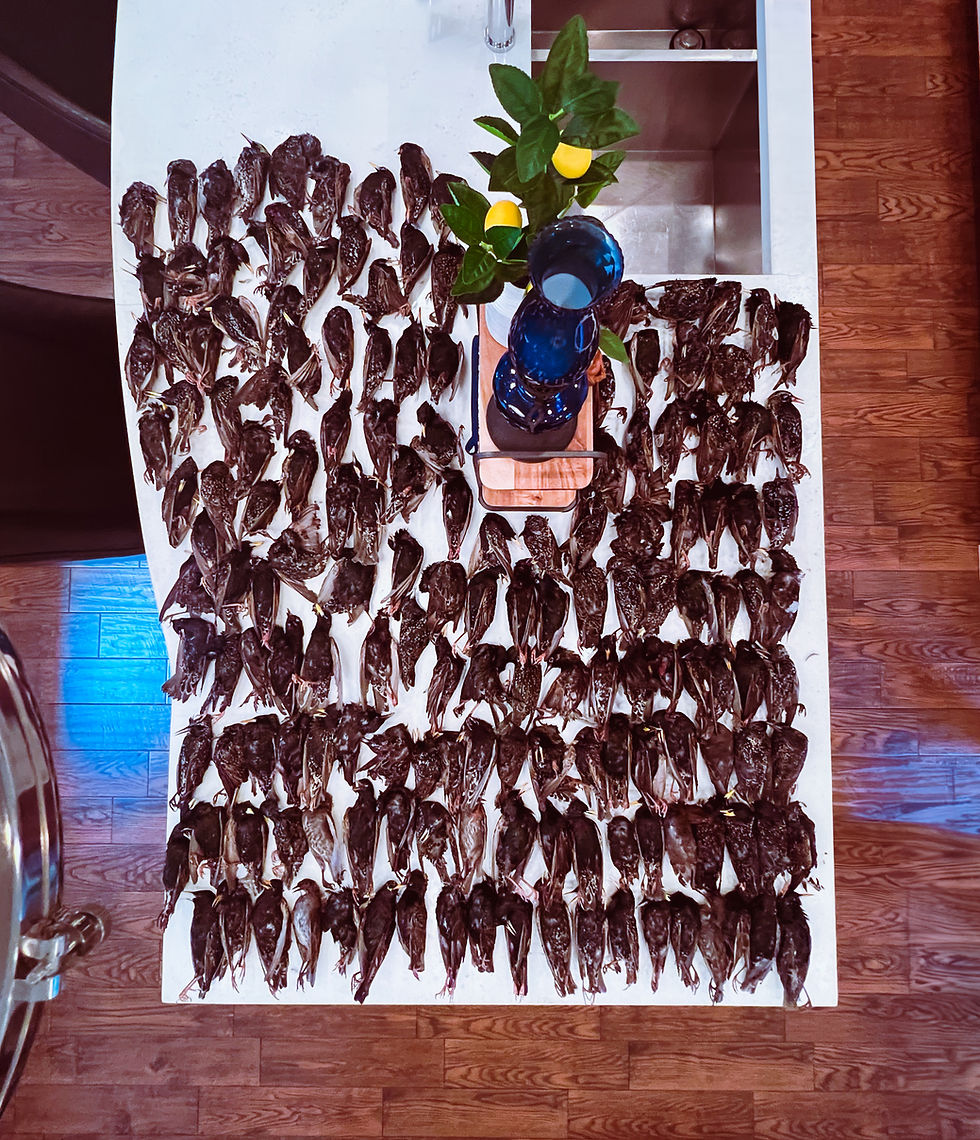
Ally's hallux sheath talon came off again on her 70th head of the season. The same injury that ended her season the year before. In hindsight, I should have cut the talon short, but luckily it's growing back again. Tina battled multiple injuries and sicknesses the entire season. She was everything a passage Cooper's hawk is known for, but we actually made it through the season with her alive and took game consistently. She ended the season with 90 head so 160 head for this year's team. Ally's numbers are a bit skewed because we purposefully tried to take it easier on her this season. She earned it after carrying last year's micro season by herself. For the number crunchers, here's this years stats:
Ally 1x Intermewed Female American Kestrel
Days Hawked: 30 (March 26-May 13)
Took Multiples: 21x
Most Head Taken in One Day: 6
Season Head Count: 70
Tina Passage Female Cooper's Hawk
Days Hawked: 39 (April 6 - July 6)
Took Multiples: 22x
Most Head Taken in One Day: 8
Season Head Count: 90
The Brown Year
Not only was this season successful by numbers, but we had more growth in our falconry than we've had in years. When I put Tina away for the molt this year, I felt a sense of accomplishment for what we were able to learn while still consistently taking game with both birds.
They say it takes a village, and for those learning to fly passage Cooper's hawks, that couldn't be more true. Now I'm not talking about the village idiots and unsupported free advice on the internet that you mold and shape until it's what you want to hear. I'm talking about advice from the village elders! Advice from successful, experienced game hawkers. I'll also take it a step further and say advice from YOUR village. Falconry isn't the same everywhere and neither are the birds. Some parts of falconry are universal. Some are dependent on your location. Nicole Perretta covers this topic well in her article "The Healthy Passage Cooper's Hawk," in Bill Boni's, Passage Cooper's Hawks and Those Who Fly 'Em, and I highly recommend that particular section.
When it came time to house Tina, I knew there were going to be some things I needed to do differently than Nicole's West Coast setup. Our climate in West Virginia is much different. The general health of Cooper's hawks here is as well. For help closer to my neck of the woods, we relied heavily on Paul Eliya. Paul was patient and invaluable to Ray and me this season, helping us over the hurdle we'd struggled with for years: how to safely keep a passage Cooper's hawk during hawking season then through the molt. While I still feel like we're ironing out some kinks, the strides we made this season were the difference between success and failure, and we have Paul to thank for that. I'm also grateful for everyone who showed up to help us make changes to Tina's mew including our friends Tim Woody, Chad the Mouseman, Trey Crowl and Jeremy Lee. From March through August, they showed up through rain and heat and put up with ever changing direction from Ray and me to get things just right.
The biggest accomplishment of the season? Tina didn't carry a single time in her 90 head of game. Carrying is something I've always worried about with passage Cooper's hawks, to the point I used to prefer a sharpy over a Coops for that reason alone. It seems silly now to think about my logic and the fact I was willing to fly a passage sharpy that was more susceptible to sickness and predation in the field because it was less likely to carry a starling over long distances. Also, to be clear, I'm not talking about putting into a bush and settling in. I'm talking about routine fear/possession-based carrying.
Thanks to techniques adopted from Nicole Perretta from her article in the 2019 North American Falconer's Association Journal, "Early Training for Young Accipiters," paired with baggies until the desired behavior was achieved at the recommend of mentor Jason Caldwell, Tina never carried and only had one minor bump in the road when we started pushing her for more than five when taking multiples. Because I picked up on the very slight changes in her behavior immediately, Paul Eliya was able to help us get in front of it before it ever became an issue.

Lastly, flying a passage Cooper's hawk comes with sickness and injury. A huge part of our success this season was attributed to avian veterinarian Dr. Jesse Fallon, DVM, MS at Cheat Lake Animal Hospital. I've trusted all my birds to his care since getting into the sport. Like all our falconry birds, the Cooper's hawk had her share of visits this season. The right veterinarian makes all the difference, and Dr. Fallon's experience with wild raptors specifically through his work with The Avian Conservation Center of Appalachia has helped him provide the best informed care to all our birds. We're lucky to have him an hour and a half away.
Because of this village I mentioned above, Ray and I were able to finally make it through a season with a passage Cooper's hawk. It's been a long-term goal for us both, and it still doesn't feel real that we finally did it. I've wanted so badly to molt out a successful passage Cooper's hawk and go into the next season with those well-earned blue gray feathers. Even now, there's no guarantee. Tina's still working through an end of the season leg injury as she molts, but it's been a darn fine season even if something happens to her now. Here's hoping we finish out the brown year together and give 2026 a run for its money!


Comments